Transportadores de lavandería
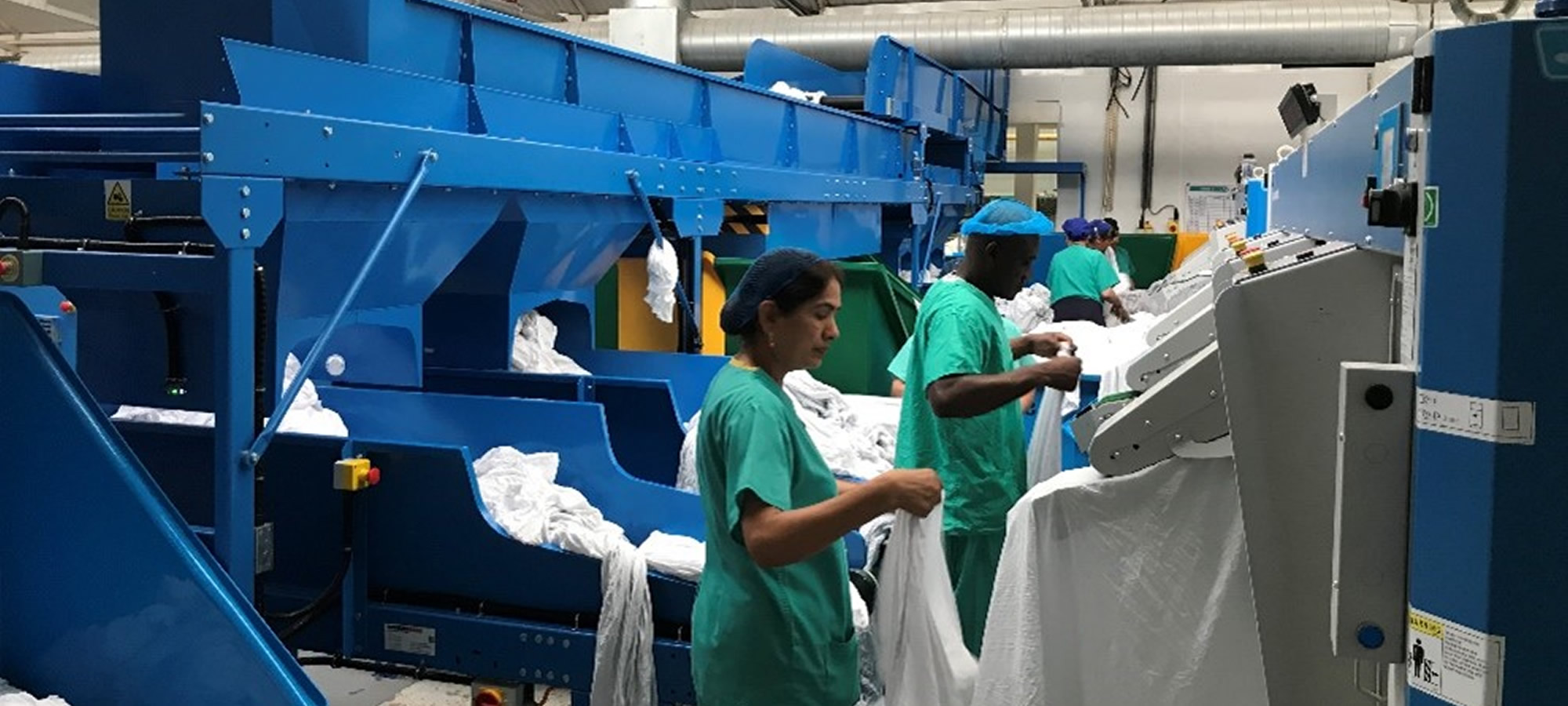
Las lavanderías industriales suelen procesar más de 500 000 prendas de ropa suelta a la semana y, para hacerlo de forma eficiente, la automatización es fundamental. Las cintas transportadoras constituyen la base de los sistemas de transporte automatizados en las lavanderías, trasladando las prendas entre las zonas de recepción de ropa sucia, a través de los procesos de limpieza y hasta el empaquetado y el envío final al usuario.
Las aplicaciones típicas de cintas transportadoras en lavanderías incluyen:
- Clasificación de la ropa sucia
- Transportadores escalonados indexados para cargar lavadoras CBW con cargas de 50 a 100 kg.
- Transportadores de pasteles
- Cintas transportadoras y plataformas para la clasificación de ropa blanca
- Vagones lanzadera para la carga de secadoras y cintas transportadoras de salida
- Cintas transportadoras de entrada y salida de la máquina de envasado retráctil
Muchas lavanderías operan en instalaciones consolidadas con equipos antiguos ya instalados, y uno de los retos para la automatización es encontrar espacio suficiente para instalar cintas transportadoras. Todas las cintas transportadoras Amber están diseñadas y fabricadas a medida para cada aplicación, por lo que se pueden adaptar a las necesidades de cada instalación modificando la longitud, el ancho y la altura de la cinta.
- Camas de acero dulce con recubrimiento de polvo y faldones de acero inoxidable o con recubrimiento de polvo.
- Superficies internas lisas
- Superficies internas sin huecos
- Bordes dobladillados alrededor de las cenefas
- Correas continuas
- Protectores robustos para los dedos ubicados en la parte superior del rodillo.
- Se prefieren los transportadores horizontales inmediatamente antes de las posiciones de transferencia de caída.
- Mayor velocidad de la cinta transportadora al transferir de una cinta a otra.
- No se permite cargar nada por encima de los laterales de las cenefas.
- Las alturas de caída entre transportadores no deben ser inferiores a la altura del borde del transportador de alimentación.
Frequently Asked Questions About Laundry Conveyors
Laundry conveyors automate the movement of linen through commercial laundry operations. They can transport linen from dirty linen receiving and sorting areas, through washing, drying, ironing and folding processes, and finally to packing and dispatch.
Typical applications include dirty linen sorting, indexing step conveyors for loading Continuous Batch Washers (CBW), cake conveyors, linen sorting belts and platforms, dryer loading shuttle cars and takeaway conveyors, and shrink wrapper infeed and outfeed belts.
Yes. Many commercial laundries operate on established sites where space is restricted by existing equipment. Amber designs and builds its laundry conveyors for the individual application, allowing dimensions such as belt length, width and height to be tailored to the site.
Belt conveyors can move dirty linen from delivery vehicles to sorting or washing areas. After washing, pressed linen or “cakes” can be conveyed to sorting areas or directly to dryers, while further conveyors can transfer dried linen towards ironing and folding operations.
Amber identifies snagging as a major consideration when conveying loose linen. Internal conveyor surfaces should therefore be smooth, continuous and wherever possible gap-free, with particular attention paid to avoiding narrowing gaps where linen could become trapped or wedged.
Where one conveyor transfers linen onto another, Amber recommends that the takeaway conveyor operates faster than the feed conveyor. This speed differential helps reduce the possibility of linen becoming trapped at the transfer point and is particularly important when transferring from a declined conveyor to a horizontal conveyor.
Small-diameter rollers, such as the 60 mm diameter rollers referenced by Amber, can be used at the head and tail of conveyors to reduce the V-shaped gap between adjoining rollers. This reduces the distance linen must travel when transferring between conveyors and helps reduce trapping.
Tuck-under occurs when linen sticks to the conveyor belt and begins following the return belt underneath the conveyor. Amber advises reducing belt friction where possible so that linen releases more easily. Where this is not possible, a sensor beneath the head roller can be linked to the conveyor emergency-stop system to detect the problem and stop the conveyor.
Depending on the conveyor arrangement and height, protection can include nip guards, full-panel underguards and local roller covers. Amber notes that guarding should provide appropriate protection while taking account of linen snagging, cleaning access, maintenance and the likelihood of operators coming into contact with moving parts.
Yes. Amber provides conveyor systems for moving linen through multiple stages of commercial laundry operations, and complementary materials-handling equipment such as lifts, hoists and shuttle cars can also be incorporated to improve the efficiency of linen movement around the laundry.